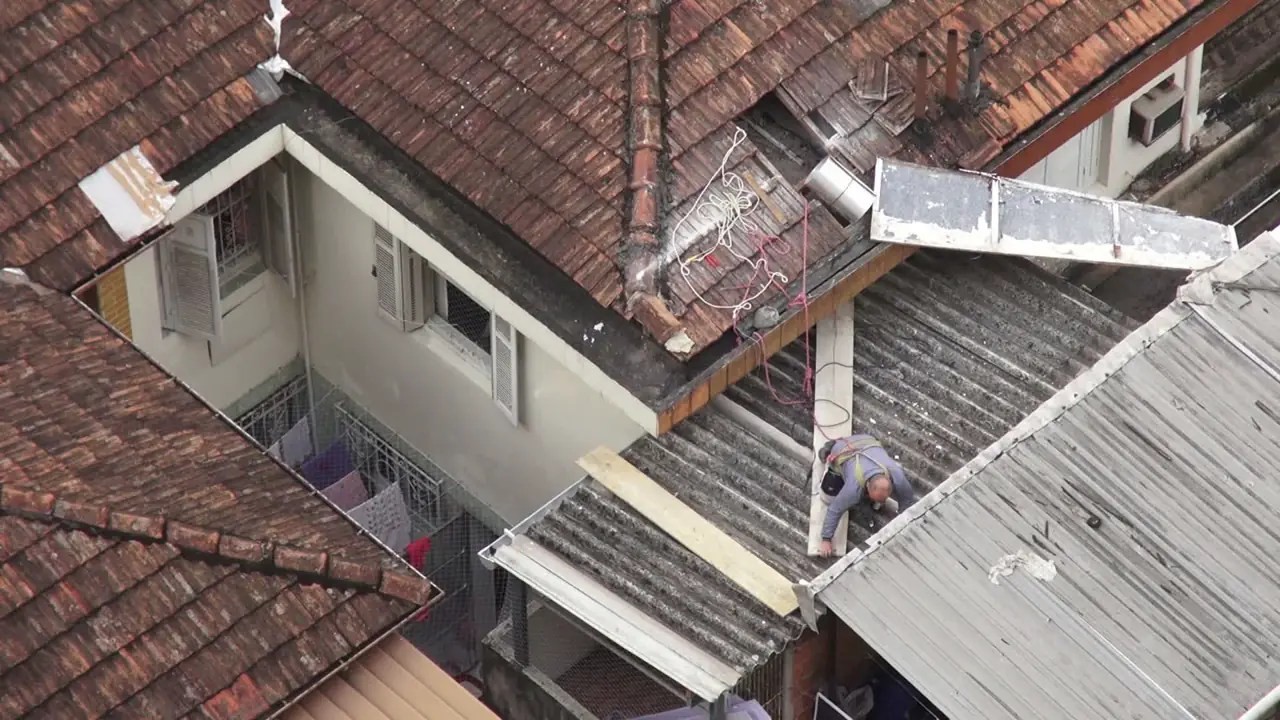
Why roofing SEO is its own animal
Roofing isn't like other trades online, and generic SEO misses it.
- Demand comes in waves. After a big storm, half the town searches at once, and every roofer's phone lights up the same week.
- There are two different buyers. One has water dripping into a bedroom and calls whoever answers first. The other is planning a replacement, getting three quotes and reading everything over weeks.
- Homeowners are wary. Storm chasers roll in after bad weather, and people know it. They look hard for signs you're local, licensed and still going to be around next year.
- You go to them. Most roofers are service-area businesses, not storefronts, and that changes how your Google profile should be set up.
A roofing SEO plan has to handle all four.
Step 1: The audit we run first
Before we touch anything, we look at where you stand:
- What shows up on the map when someone searches roof repair or roof replacement in your main towns
- How complete your Google Business Profile is, and which categories it uses
- How your review count and recency compare to the three roofers Google shows first
- How fast your site loads on a phone, and whether it has a page for each job
- Whether your business name, phone and service area match across the web
- What ChatGPT says when a homeowner asks it for a roofer in your town
You get a plain list of what to fix, in order of what we think moves the phone most.
Step 2: A Google Business Profile built for a roofer
- Primary category: Roofing contractor. Secondary categories only for work you really do, like gutter service.
- Service area set to the towns you actually work. If customers don't come to your address, Google's guidelines say to hide it and show your service area instead.
- Services listed by name: repair, replacement, storm damage, inspections, flat roofs, whatever you do.
- Photos of real jobs. Before and after, your crew on site, your trucks. Fresh photos through the year.
- Hours that match when someone answers. More on that in step 8.
Step 3: A page for every job you want more of
Roof repair, roof replacement, storm and hail damage, leak repair, flat roofing, gutters. Only what you actually do. Each page opens with a straight answer, then covers what homeowners ask before they call: signs they need it, what changes the price, how long the job takes, what materials you work with, and how you handle working with their insurance adjuster, in your own words.
We don't put prices on your pages unless you want your own ranges there. We don't make promises about insurance outcomes, ever.
Step 4: Service-area pages without the spam
The old trick was forty town pages with the same text and a different town name. Google's spam policies call those doorway pages, and they can drag the whole site down.
A town page earns its place when there's something true and specific to say: jobs you've done there, the roof styles common in those neighborhoods, the local permit steps. We'd rather build six real town pages than forty fake ones.
Step 5: Ready before storm season, not after
When a storm hits, it's too late to start writing. So we get the storm content up ahead of time: what a homeowner should do after storm damage (safety first, photos of the damage, a temporary tarp if it's leaking), how to tell whether they need an inspection, and how your inspection works.
When weather does hit, we help you post on your Google profile and keep your hours and service area current, so you're the clear answer the week everyone is searching.
Step 6: Reviews that say something
- Ask every customer right after the job, with a link that takes one tap.
- Let them say it in their own words. A review that names the job and the town ("replaced our roof in Milton after the nor'easter") helps homeowners and search engines both.
- Reply to every review, the good ones and the rough ones.
- Never pay for, filter or write reviews. Google's rules forbid it, and homeowners can tell.
Step 7: Show up in AI answers
More homeowners are asking ChatGPT and Google's AI answers who to call. We make you easy for them to find and trust: answer-first pages, structured data using the RoofingContractor type, the same facts on every listing, and accurate profiles on the directories homeowners use. More on how that works on our AEO services page.
Step 8: Make sure the call gets answered
Every step above exists to make your phone ring. But roofers spend the day on roofs. A ringing phone nobody answers is a lead handed to the next roofer on the map.
That's why every plan includes Rungback, our AI answering service. It answers in your company's name, tells the caller it's an AI assistant and that the call is recorded, flags an active leak as urgent, and emails you the details so you can call back from the ladder.
What we measure
Calls. Estimate requests. Calls and direction requests from your Google profile. Review count. What AI assistants say about you. Rankings are part of the picture, but they don't pay your crew. Calls do.
What we can't show you yet
We'll be straight. We don't have roofing SEO case studies to show you yet. What we can show you is this method, step by step, and a free look at where you stand today. When we have real results from real roofers, with their OK, they'll be on this page.
Or call us at (857) 421-8348.